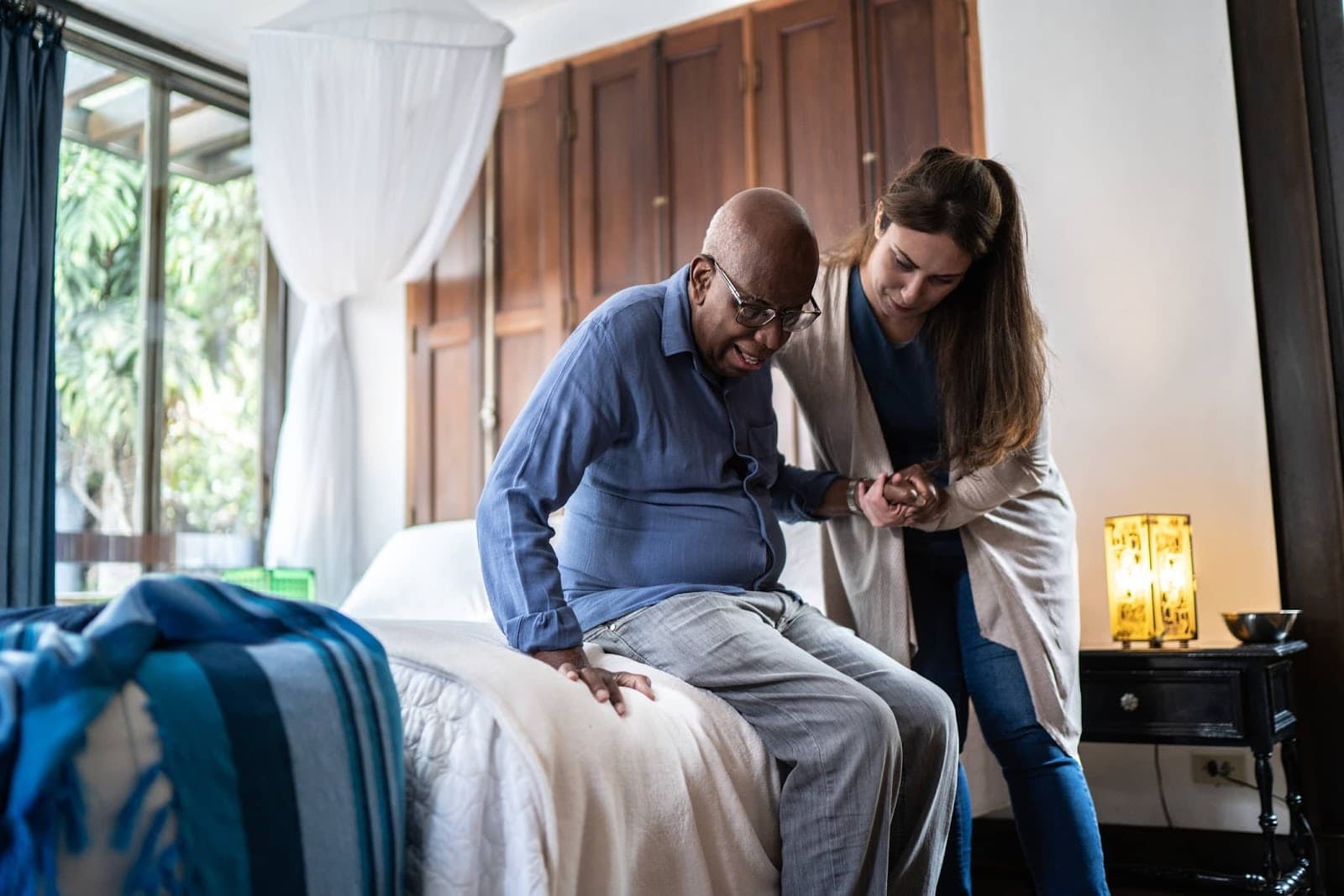
Provide or get specialized rehabilitative services as required for a resident.
Severity G of L: actual harm, isolatedCorrected Jun 30, 2024
Provide appropriate care for a resident to maintain and/or improve range of motion (ROM), limited ROM and/or mobility, unless a decline is for a medical reason.
Severity G of L: actual harm, isolatedCorrected Jun 30, 2024
Install emergency lighting that can last at least 1 1/2 hours.
Severity F of L: no actual harm, potential for more than minimal harm, widespreadCorrected Jun 18, 2024
Have approved installation, maintenance and testing program for fire alarm systems.
Severity F of L: no actual harm, potential for more than minimal harm, widespreadCorrected Jun 18, 2024
Safeguard resident-identifiable information and/or maintain medical records on each resident that are in accordance with accepted professional standards.
Severity E of L: no actual harm, potential for more than minimal harm, patternCorrected Jun 30, 2024
Ensure a qualified health professional conducts resident assessments.
Severity E of L: no actual harm, potential for more than minimal harm, patternCorrected Jun 30, 2024
Develop and implement a complete care plan that meets all the resident's needs, with timetables and actions that can be measured.
Severity E of L: no actual harm, potential for more than minimal harm, patternCorrected Jun 30, 2024
Develop the complete care plan within 7 days of the comprehensive assessment; and prepared, reviewed, and revised by a team of health professionals.
Severity E of L: no actual harm, potential for more than minimal harm, patternCorrected Jun 30, 2024
Provide appropriate treatment and care according to orders, resident’s preferences and goals.
Severity E of L: no actual harm, potential for more than minimal harm, patternCorrected Jun 30, 2024
Provide appropriate pressure ulcer care and prevent new ulcers from developing.
Severity E of L: no actual harm, potential for more than minimal harm, patternCorrected Jun 30, 2024
Ensure that feeding tubes are not used unless there is a medical reason and the resident agrees; and provide appropriate care for a resident with a feeding tube.
Severity E of L: no actual harm, potential for more than minimal harm, patternCorrected Jun 30, 2024
Try different approaches before using a bed rail. If a bed rail is needed, the facility must (1) assess a resident for safety risk; (2) review these risks and benefits with the resident/representative; (3) get informed consent; and (4) Correctly install and maintain the bed rail.
Severity E of L: no actual harm, potential for more than minimal harm, patternCorrected Jun 30, 2024
Ensure that nurses and nurse aides have the appropriate competencies to care for every resident in a way that maximizes each resident's well being.
Severity E of L: no actual harm, potential for more than minimal harm, patternCorrected Jun 30, 2024
Ensure menus must meet the nutritional needs of residents, be prepared in advance, be followed, be updated, be reviewed by dietician, and meet the needs of the resident.
Severity E of L: no actual harm, potential for more than minimal harm, patternCorrected Jun 30, 2024
Procure food from sources approved or considered satisfactory and store, prepare, distribute and serve food in accordance with professional standards.
Severity E of L: no actual harm, potential for more than minimal harm, patternCorrected Jun 30, 2024
Have a plan that describes the process for conducting QAPI and QAA activities.
Severity E of L: no actual harm, potential for more than minimal harm, patternCorrected Jun 30, 2024
Provide and implement an infection prevention and control program.
Severity E of L: no actual harm, potential for more than minimal harm, patternCorrected Jun 30, 2024
Make sure that a working call system is available in each resident's bathroom and bathing area.
Severity E of L: no actual harm, potential for more than minimal harm, patternCorrected Jun 30, 2024
Ensure each resident receives and the facility provides food prepared in a form designed to meet individual needs.
Severity D of L: no actual harm, potential for more than minimal harm, isolatedCorrected Jun 30, 2024
Implement gradual dose reductions(GDR) and non-pharmacological interventions, unless contraindicated, prior to initiating or instead of continuing psychotropic medication; and PRN orders for psychotropic medications are only used when the medication is necessary and PRN use is limited.
Severity D of L: no actual harm, potential for more than minimal harm, isolatedCorrected Jun 30, 2024
Ensure medication error rates are not 5 percent or greater.
Severity D of L: no actual harm, potential for more than minimal harm, isolatedCorrected Jun 30, 2024
Follow proper procedures when the fire alarm was out of service for more than 4 hours.
Severity D of L: no actual harm, potential for more than minimal harm, isolatedCorrected Jun 18, 2024
Have a complete alarm system manually initiated and initiated by fire sprinkler system connection.
Severity D of L: no actual harm, potential for more than minimal harm, isolatedCorrected Jun 18, 2024
Construct fire resistant interior walls.
Severity D of L: no actual harm, potential for more than minimal harm, isolatedCorrected Jun 18, 2024
Ensure that special areas are constructed so that walls can resist fire for one hour or have an approved fire extinguishing system.
Severity D of L: no actual harm, potential for more than minimal harm, isolatedCorrected Jun 18, 2024
Ensure that residents are fully informed and understand their health status, care and treatments.
Severity D of L: no actual harm, potential for more than minimal harm, isolatedCorrected Jun 30, 2024
Reasonably accommodate the needs and preferences of each resident.
Severity D of L: no actual harm, potential for more than minimal harm, isolatedCorrected Jun 30, 2024
Immediately tell the resident, the resident's doctor, and a family member of situations (injury/decline/room, etc.) that affect the resident.
Severity D of L: no actual harm, potential for more than minimal harm, isolatedCorrected Jun 30, 2024
Ensure that each resident is free from the use of physical restraints, unless needed for medical treatment.
Severity D of L: no actual harm, potential for more than minimal harm, isolatedCorrected Jun 30, 2024
Coordinate assessments with the pre-admission screening and resident review program; and referring for services as needed.
Severity D of L: no actual harm, potential for more than minimal harm, isolatedCorrected Jun 30, 2024
Ensure residents do not lose the ability to perform activities of daily living unless there is a medical reason.
Severity D of L: no actual harm, potential for more than minimal harm, isolatedCorrected Jun 30, 2024
Provide care and assistance to perform activities of daily living for any resident who is unable.
Severity D of L: no actual harm, potential for more than minimal harm, isolatedCorrected Jun 30, 2024
Develop and maintain an Emergency Preparedness Program (EP).
Severity C of L: potential for minimal harm, widespreadCorrected Jun 18, 2024