
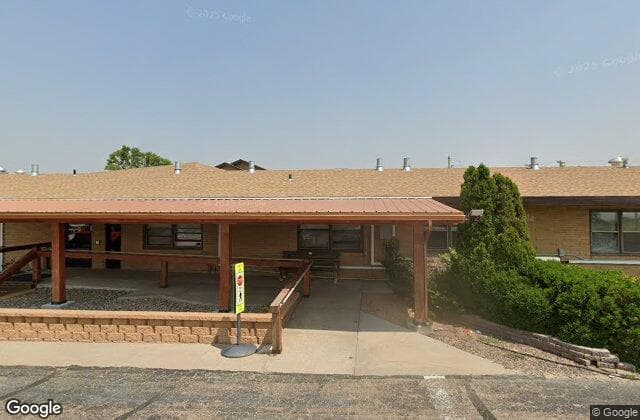
Cheyenne County Village
820 S Denison StreetOwn this community? Update your listing · Marketing for operators
Quick Facts
- Total units
- 30
- Medicare rating
- 2 of 5
- Ownership
- Non profit, Corporation
- Certified beds
- 30
- Inspections
- View history (68 citations)
- Ownership
- Nonprofit organization, not a corporate chain
- Care continuum
- 9 independent living, 10 assisted living, 30 skilled nursing units
- Origins
- Founded in 2018 by five local citizens
CMS Care Compare
What Families Think
An automated summary of family reviews and public information. Not verified by MyLivingChoice; confirm services, staffing and pricing with the community.
Cheyenne County Village is a small, nonprofit senior living campus in rural St. Francis, Kansas, offering independent living, assisted living, skilled nursing, and memory support under one roof. There are no published reviews or ratings available, so it's hard to gauge day-to-day experience from residents or families.
What reviewers praise
- Full continuum of care on one campus
- Nonprofit, community-rooted mission and governance
- Small-scale setting with only 30 skilled nursing beds
- Focus on dignity and quality of life for seniors
What reviewers flag
- No reviews available to assess actual care experience
- No amenities are listed for the community
- No independent ratings from Google or Yelp to reference
AI-generated from reviews and community data.
Cheyenne County Village is a senior living community in St Francis, Kansas offering Skilled Nursing / Long Term Care.
About Cheyenne County Village
Cheyenne County Village Inc is a nonprofit senior living community in St. Francis, Kansas, offering independent living apartments, assisted living, skilled nursing care, and memory support services.
The community operates multiple care levels to meet varying senior needs. It includes 9 independent living apartments, a 10-unit assisted living facility, and a 30-bed skilled nursing facility. These services address different stages of senior living, from those seeking independent housing to residents requiring skilled nursing care and memory support.
Cheyenne County Village was formed in August 2018 by a board of five local citizens and is managed by Grace Team as the management company. The organization operates under the Cheyenne County Kansas Community Foundation as a vital nonprofit senior living resource in rural Kansas.
The community emphasizes providing quality senior services grounded in a philosophy of creating a place where residents want to live, staff enjoy working, and the surrounding community takes pride. The facility is dedicated to sustaining services for seniors and those with disabilities, focusing on dignity and quality care in the later chapters of life.
Types of Care at Cheyenne County Village
Need help deciding?
Tell us what you're looking for and we'll match you with communities that fit. Free for families.
Help Me ChooseReviews of Cheyenne County Village
No reviews yet for this community. Be the first.
Government Inspection History
4 inspection visits in the last three years, 68 citations on file. Inspections are conducted by state agencies on behalf of the U.S. Centers for Medicare & Medicaid Services (CMS).
Apr 3, 2024Health Complaint2 citations
Provide appropriate pressure ulcer care and prevent new ulcers from developing.
Severity J of L: immediate jeopardy, isolatedFound during a complaint inspectionCorrected Apr 18, 2024
Provide safe, appropriate pain management for a resident who requires such services.
Severity G of L: actual harm, isolatedFound during a complaint inspectionCorrected Apr 18, 2024
Sep 28, 2023Fire Safety StandardHealth Standard25 citations
Install emergency lighting that can last at least 1 1/2 hours.
Severity F of L: no actual harm, potential for more than minimal harm, widespreadCorrected Nov 18, 2023
Develop and maintain an Emergency Preparedness Program (EP).
Severity F of L: no actual harm, potential for more than minimal harm, widespreadCorrected Nov 18, 2023
Have the Quality Assessment and Assurance group have the required members and meet at least quarterly
Severity F of L: no actual harm, potential for more than minimal harm, widespreadCorrected Oct 25, 2023
Electronically submit to CMS complete and accurate direct care staffing information, based on payroll and other verifiable and auditable data.
Severity F of L: no actual harm, potential for more than minimal harm, widespreadCorrected Oct 25, 2023
Procure food from sources approved or considered satisfactory and store, prepare, distribute and serve food in accordance with professional standards.
Severity F of L: no actual harm, potential for more than minimal harm, widespreadCorrected Oct 25, 2023
Ensure that special areas are constructed so that walls can resist fire for one hour or have an approved fire extinguishing system.
Severity F of L: no actual harm, potential for more than minimal harm, widespreadCorrected Nov 18, 2023
Have properly located and lighted "Exit" signs.
Severity F of L: no actual harm, potential for more than minimal harm, widespreadCorrected Nov 18, 2023
Have simulated fire drills held at unexpected times.
Severity F of L: no actual harm, potential for more than minimal harm, widespreadCorrected Nov 18, 2023
Inspect, test, and maintain automatic sprinkler systems.
Severity F of L: no actual harm, potential for more than minimal harm, widespreadCorrected Nov 18, 2023
Have approved installation, maintenance and testing program for fire alarm systems.
Severity F of L: no actual harm, potential for more than minimal harm, widespreadCorrected Nov 18, 2023
Ensure that personnel concerned with handling of medical gases and cylinders are trained on the risk.
Severity F of L: no actual harm, potential for more than minimal harm, widespreadCorrected Nov 18, 2023
Have proper medical gas storage and administration areas.
Severity F of L: no actual harm, potential for more than minimal harm, widespreadCorrected Nov 18, 2023
Have generator or other power source capable of supplying service within 10 seconds.
Severity F of L: no actual harm, potential for more than minimal harm, widespreadCorrected Nov 18, 2023
Ensure receptacles at patient bed locations and where general anesthesia is administered, are tested after initial installation, replacement or servicing.
Severity F of L: no actual harm, potential for more than minimal harm, widespreadCorrected Nov 18, 2023
To conduct inspection, testing and maintenance of fire doors by qualified individuals.
Severity F of L: no actual harm, potential for more than minimal harm, widespreadCorrected Nov 18, 2023
Have properly installed electrical wiring and gas equipment.
Severity E of L: no actual harm, potential for more than minimal harm, patternCorrected Nov 18, 2023
Ensure smoke barriers are constructed to a 1 hour fire resistance rating.
Severity E of L: no actual harm, potential for more than minimal harm, patternCorrected Nov 18, 2023
Ensure that corridors are separated from use areas by walls constructed to limit the passage of smoke.
Severity E of L: no actual harm, potential for more than minimal harm, patternCorrected Nov 18, 2023
Provide and implement an infection prevention and control program.
Severity D of L: no actual harm, potential for more than minimal harm, isolatedCorrected Oct 25, 2023
Honor the resident's right to a dignified existence, self-determination, communication, and to exercise his or her rights.
Severity D of L: no actual harm, potential for more than minimal harm, isolatedCorrected Oct 25, 2023
Develop and implement a complete care plan that meets all the resident's needs, with timetables and actions that can be measured.
Severity D of L: no actual harm, potential for more than minimal harm, isolatedCorrected Oct 25, 2023
Ensure services provided by the nursing facility meet professional standards of quality.
Severity D of L: no actual harm, potential for more than minimal harm, isolatedCorrected Oct 25, 2023
Provide appropriate care for residents who are continent or incontinent of bowel/bladder, appropriate catheter care, and appropriate care to prevent urinary tract infections.
Severity D of L: no actual harm, potential for more than minimal harm, isolatedCorrected Oct 25, 2023
Ensure that nurses and nurse aides have the appropriate competencies to care for every resident in a way that maximizes each resident's well being.
Severity D of L: no actual harm, potential for more than minimal harm, isolatedCorrected Oct 25, 2023
Have posted "No-smoking" signs in areas where smoking is not permitted or ashtrays provided where smoking was allowed.
Severity D of L: no actual harm, potential for more than minimal harm, isolatedCorrected Nov 18, 2023
Oct 13, 2022Fire Safety StandardHealth Standard28 citations
Have generator or other power source capable of supplying service within 10 seconds.
Severity F of L: no actual harm, potential for more than minimal harm, widespreadCorrected Dec 19, 2022
Install emergency lighting that can last at least 1 1/2 hours.
Severity F of L: no actual harm, potential for more than minimal harm, widespreadCorrected Dec 19, 2022
Inspect, test, and maintain automatic sprinkler systems.
Severity F of L: no actual harm, potential for more than minimal harm, widespreadCorrected Dec 19, 2022
Have simulated fire drills held at unexpected times.
Severity F of L: no actual harm, potential for more than minimal harm, widespreadCorrected Dec 19, 2022
To conduct inspection, testing and maintenance of fire doors by qualified individuals.
Severity F of L: no actual harm, potential for more than minimal harm, widespreadCorrected Dec 19, 2022
Ensure that building systems meet requirements determined by risk assessment procedures performed by qualified personnel.
Severity F of L: no actual harm, potential for more than minimal harm, widespreadCorrected Dec 19, 2022
Implement a program that monitors antibiotic use.
Severity F of L: no actual harm, potential for more than minimal harm, widespreadCorrected Nov 25, 2022
Conduct testing and exercise requirements.
Severity F of L: no actual harm, potential for more than minimal harm, widespreadCorrected Dec 19, 2022
Have proper medical gas storage and administration areas.
Severity E of L: no actual harm, potential for more than minimal harm, patternCorrected Dec 19, 2022
Ensure proper usage of power strips and extension cords.
Severity E of L: no actual harm, potential for more than minimal harm, patternCorrected Dec 19, 2022
Have properly installed electrical wiring and gas equipment.
Severity E of L: no actual harm, potential for more than minimal harm, patternCorrected Dec 19, 2022
Ensure smoke barriers are constructed to a 1 hour fire resistance rating.
Severity E of L: no actual harm, potential for more than minimal harm, patternCorrected Dec 19, 2022
Install corridor and hallway doors that block smoke.
Severity E of L: no actual harm, potential for more than minimal harm, patternCorrected Dec 19, 2022
Immediately tell the resident, the resident's doctor, and a family member of situations (injury/decline/room, etc.) that affect the resident.
Severity D of L: no actual harm, potential for more than minimal harm, isolatedCorrected Nov 25, 2022
Provide care and assistance to perform activities of daily living for any resident who is unable.
Severity D of L: no actual harm, potential for more than minimal harm, isolatedCorrected Nov 25, 2022
Implement gradual dose reductions(GDR) and non-pharmacological interventions, unless contraindicated, prior to initiating or instead of continuing psychotropic medication; and PRN orders for psychotropic medications are only used when the medication is necessary and PRN use is limited.
Severity D of L: no actual harm, potential for more than minimal harm, isolatedCorrected Nov 25, 2022
Provide the appropriate treatment and services to a resident who displays or is diagnosed with dementia.
Severity D of L: no actual harm, potential for more than minimal harm, isolatedCorrected Nov 25, 2022
Ensure that nurses and nurse aides have the appropriate competencies to care for every resident in a way that maximizes each resident's well being.
Severity D of L: no actual harm, potential for more than minimal harm, isolatedCorrected Nov 25, 2022
Provide appropriate care for residents who are continent or incontinent of bowel/bladder, appropriate catheter care, and appropriate care to prevent urinary tract infections.
Severity D of L: no actual harm, potential for more than minimal harm, isolatedCorrected Nov 25, 2022
Ensure that a nursing home area is free from accident hazards and provides adequate supervision to prevent accidents.
Severity D of L: no actual harm, potential for more than minimal harm, isolatedCorrected Nov 25, 2022
Provide appropriate treatment and care according to orders, resident’s preferences and goals.
Severity D of L: no actual harm, potential for more than minimal harm, isolatedCorrected Nov 25, 2022
Ensure residents do not lose the ability to perform activities of daily living unless there is a medical reason.
Severity D of L: no actual harm, potential for more than minimal harm, isolatedCorrected Nov 25, 2022
Plan the resident's discharge to meet the resident's goals and needs.
Severity D of L: no actual harm, potential for more than minimal harm, isolatedCorrected Nov 25, 2022
Develop the complete care plan within 7 days of the comprehensive assessment; and prepared, reviewed, and revised by a team of health professionals.
Severity D of L: no actual harm, potential for more than minimal harm, isolatedCorrected Nov 25, 2022
Develop and implement a complete care plan that meets all the resident's needs, with timetables and actions that can be measured.
Severity D of L: no actual harm, potential for more than minimal harm, isolatedCorrected Nov 25, 2022
Respond appropriately to all alleged violations.
Severity D of L: no actual harm, potential for more than minimal harm, isolatedCorrected Nov 25, 2022
Timely report suspected abuse, neglect, or theft and report the results of the investigation to proper authorities.
Severity D of L: no actual harm, potential for more than minimal harm, isolatedCorrected Nov 25, 2022
Ensure that special areas are constructed so that walls can resist fire for one hour or have an approved fire extinguishing system.
Severity D of L: no actual harm, potential for more than minimal harm, isolatedCorrected Dec 19, 2022
Jul 28, 2021Fire Safety StandardHealth Standard13 citations
Have generator or other power source capable of supplying service within 10 seconds.
Severity F of L: no actual harm, potential for more than minimal harm, widespreadCorrected Sep 23, 2021
Have approved installation, maintenance and testing program for fire alarm systems.
Severity F of L: no actual harm, potential for more than minimal harm, widespreadCorrected Sep 23, 2021
Inspect, test, and maintain automatic sprinkler systems.
Severity F of L: no actual harm, potential for more than minimal harm, widespreadCorrected Sep 23, 2021
Have simulated fire drills held at unexpected times.
Severity F of L: no actual harm, potential for more than minimal harm, widespreadCorrected Sep 23, 2021
Procure food from sources approved or considered satisfactory and store, prepare, distribute and serve food in accordance with professional standards.
Severity E of L: no actual harm, potential for more than minimal harm, patternCorrected Aug 3, 2021
Install emergency lighting that can last at least 1 1/2 hours.
Severity E of L: no actual harm, potential for more than minimal harm, patternCorrected Sep 23, 2021
Ensure that special areas are constructed so that walls can resist fire for one hour or have an approved fire extinguishing system.
Severity E of L: no actual harm, potential for more than minimal harm, patternCorrected Sep 23, 2021
Install corridor and hallway doors that block smoke.
Severity E of L: no actual harm, potential for more than minimal harm, patternCorrected Sep 23, 2021
Provide properly protected cooking facilities.
Severity D of L: no actual harm, potential for more than minimal harm, isolatedCorrected Sep 23, 2021
Implement gradual dose reductions(GDR) and non-pharmacological interventions, unless contraindicated, prior to initiating or instead of continuing psychotropic medication; and PRN orders for psychotropic medications are only used when the medication is necessary and PRN use is limited.
Severity D of L: no actual harm, potential for more than minimal harm, isolatedCorrected Aug 13, 2021
Ensure that a nursing home area is free from accident hazards and provides adequate supervision to prevent accidents.
Severity D of L: no actual harm, potential for more than minimal harm, isolatedCorrected Aug 25, 2021
Develop the complete care plan within 7 days of the comprehensive assessment; and prepared, reviewed, and revised by a team of health professionals.
Severity D of L: no actual harm, potential for more than minimal harm, isolatedCorrected Aug 25, 2021
Allow residents to easily view the nursing home's survey results and communicate with advocate agencies.
Severity C of L: potential for minimal harm, widespreadCorrected Aug 3, 2021
Source: CMS Care Compare, public federal data covering certified nursing facilities, refreshed monthly. Citations range from A (least serious) to L (most serious) on the federal scope and severity scale. Most citations are corrected quickly; review the details and ask the community about anything that concerns you.
Frequently Asked Questions
What types of care does Cheyenne County Village offer?
Cheyenne County Village offers Skilled Nursing / Long Term Care.
Where is Cheyenne County Village located?
Cheyenne County Village is located at 820 S Denison Street in St Francis, Kansas.
What do families say about Cheyenne County Village?
Cheyenne County Village is a small, nonprofit senior living campus in rural St. Francis, Kansas, offering independent living, assisted living, skilled nursing, and memory support under one roof. There are no published reviews or ratings available, so it's hard to gauge day-to-day experience from residents or families. Reviews on MyLivingChoice come from families who confirmed a connection to the community and appear with the reviewer's first name and last initial.
How did Cheyenne County Village do on recent health and safety inspections?
Cheyenne County Village had 4 government inspection visits in the last three years, with 68 citations on file according to CMS Care Compare data. The full history, including what each citation was for and whether it was corrected, is in the inspection section on this page.
How can families visit Cheyenne County Village?
Submit the Request Information form on this page, or contact Cheyenne County Village directly, to arrange a tour. Sharing your timeline and care needs up front helps the community prepare for your visit.
Work at Cheyenne County Village? Claim this listing to update photos, pricing, and details. It's free.